
How LCD Module Features Shape LED Display User Experience: An In-Depth Exploration
How LCD Module Features Shape LED Display User Experience Table of Contents 1. Introduction to LCD Modules and LED Displays 2. Understanding LCD Modules: A Comprehensive Overview 3. Key LCD Module Features and Their Impact on LED Displays 3.1 Resolution: The Clarity Factor 3.2 Brightness: Illuminating User Experience 3.3 Contrast Ratio: Enhancing Image Depth 3.4
2025-01-17
How LCD Module Features Shape LED Display User Experience
Table of Contents
- 1. Introduction to LCD Modules and LED Displays
- 2. Understanding LCD Modules: A Comprehensive Overview
- 3. Key LCD Module Features and Their Impact on LED Displays
- 3.1 Resolution: The Clarity Factor
- 3.2 Brightness: Illuminating User Experience
- 3.3 Contrast Ratio: Enhancing Image Depth
- 3.4 Refresh Rate: Smoother Visuals
- 3.5 Color Accuracy: True-to-Life Representation
- 3.6 Viewing Angles: The Importance of Perspective
- 4. The Integration of LCD Modules in LED Displays
- 5. Enhancing User Experience through Quality LCD Modules
- 6. Future Trends: Evolving LCD and LED Technologies
- 7. Conclusion
- 8. FAQs
1. Introduction to LCD Modules and LED Displays
In the realm of digital signage and visual communication, the interplay between LCD modules and LED displays is critical. LCD (Liquid Crystal Display) modules serve as essential components that define how visuals are rendered on LED (Light Emitting Diode) displays. The features embedded within these LCD modules significantly influence the overall user experience. Understanding this relationship helps manufacturers and users alike optimize their display technologies for maximum impact.
2. Understanding LCD Modules: A Comprehensive Overview
LCD modules are comprised of several layers, including a backlight, liquid crystal layer, and polarizers. These components work in harmony to control light and color output, providing the display with its characteristic visual qualities. LCD technology has evolved significantly, enabling higher resolutions, better color reproduction, and improved energy efficiency.
2.1 The Structure of LCD Modules
The structure of an LCD module is designed to maximize light transmission while minimizing distortion. It consists of:
- **Backlight Unit**: Provides illumination.
- **Liquid Crystal Layer**: Modulates light to create images.
- **Polarizers**: Filters light to enhance visibility and contrast.
This intricate setup is what makes LCD a popular choice for LED display systems.
3. Key LCD Module Features and Their Impact on LED Displays
The features of LCD modules directly impact the performance and quality of LED displays. Below, we discuss six crucial aspects that play a significant role in shaping user experience.
3.1 Resolution: The Clarity Factor
Resolution is a primary determinant of image clarity on LED displays. It refers to the number of pixels used to create an image, typically expressed as width x height (e.g., 1920 x 1080). Higher resolutions translate to finer details and sharper images, enhancing viewer engagement.
3.2 Brightness: Illuminating User Experience
Brightness is measured in nits and indicates how much light a display emits. Adequate brightness is essential for outdoor LED displays to ensure visibility in bright environments. The optimal brightness level enhances user experience by making content more legible, regardless of ambient light conditions.
3.3 Contrast Ratio: Enhancing Image Depth
The contrast ratio is the difference between the darkest black and the brightest white a display can produce. A higher contrast ratio improves the depth of images, making colors more vibrant and details more pronounced. This feature is particularly important for applications like advertising, where visual impact is crucial.
3.4 Refresh Rate: Smoother Visuals
The refresh rate, measured in hertz (Hz), indicates how many times per second the display refreshes the image. A higher refresh rate reduces motion blur and flickering, which is vital for video content and fast-paced graphics. Users enjoy a smoother viewing experience with higher refresh rates, leading to increased satisfaction.
3.5 Color Accuracy: True-to-Life Representation
Color accuracy measures how closely the colors displayed on a screen match the original source. High color accuracy ensures that images are represented authentically, which is critical for branding and marketing purposes. A display with superior color reproduction enhances user engagement and experience.
3.6 Viewing Angles: The Importance of Perspective
Viewing angles refer to the maximum angle at which a display can be viewed without significant loss of quality. Wider viewing angles are essential for LED displays used in public spaces, ensuring that quality remains consistent no matter where the viewer stands. This feature is particularly important in environments where viewers are likely to be positioned at various angles to the screen.
4. The Integration of LCD Modules in LED Displays
The integration of LCD modules in LED displays requires a thorough understanding of how each component interacts. The LCD module must be compatible with the LED driver circuitry, ensuring that the signals are appropriately transmitted to create the intended visual effect.
4.1 Achieving Optimal Integration
Achieving optimal integration involves careful selection of components, including the type of LCD panel, the backlighting method, and the LED configuration. This selection process significantly influences the overall performance and user experience of the display.
5. Enhancing User Experience through Quality LCD Modules
The ultimate goal of integrating high-quality LCD modules into LED displays is to enhance user experience. Factors such as clarity, brightness, contrast, and color accuracy contribute to how viewers perceive content.
5.1 Key Factors Driving User Engagement
Several factors drive user engagement, including:
- **Visual Quality**: Clarity and detail attract attention.
- **Legibility**: Adequate brightness ensures readability.
- **Emotional Response**: Color accuracy influences viewer emotion.
By focusing on these aspects, manufacturers can create LED displays that resonate with users, leading to greater satisfaction and engagement.
6. Future Trends: Evolving LCD and LED Technologies
Technology continues to evolve, leading to innovative advancements in LCD and LED displays. Emerging trends include:
- **Mini-LED and Micro-LED Technologies**: These provide superior brightness and contrast, enhancing user experience.
- **Flexible Displays**: Offering new applications in various environments.
- **Artificial Intelligence Integration**: AI-driven optimization for personalized user experiences.
Understanding these trends is crucial for stakeholders in the display industry to remain competitive.
7. Conclusion
In conclusion, **the features of LCD modules have a profound impact on the user experience of LED displays**. Factors such as resolution, brightness, contrast ratio, refresh rate, color accuracy, and viewing angles are critical in shaping visual performance and viewer satisfaction. As technology continues to advance, stakeholders must stay informed about emerging trends to optimize their display solutions and enhance user engagement.
8. FAQs
1. What is the role of LCD modules in LED displays?
LCD modules serve as crucial components that control light and color output, significantly influencing the visual performance of LED displays.
2. How does resolution affect the user experience of LED displays?
Higher resolution provides sharper images and finer details, enhancing viewer engagement and satisfaction.
3. What is the importance of brightness in LED displays?
Brightness ensures visibility in various lighting conditions, making content more legible and engaging for users.
4. Why is color accuracy essential for LED displays?
Color accuracy ensures that images are represented authentically, which is critical for branding and marketing efforts.
5. How do viewing angles impact user experience?
Wider viewing angles maintain visual quality from various perspectives, enhancing the overall user experience in public settings.
By focusing on the intricate relationships between LCD module features and LED display user experience, we can create high-quality visual solutions that captivate and engage audiences effectively.
Related info
Subscribe to us
Get the latest updates as soon as possible


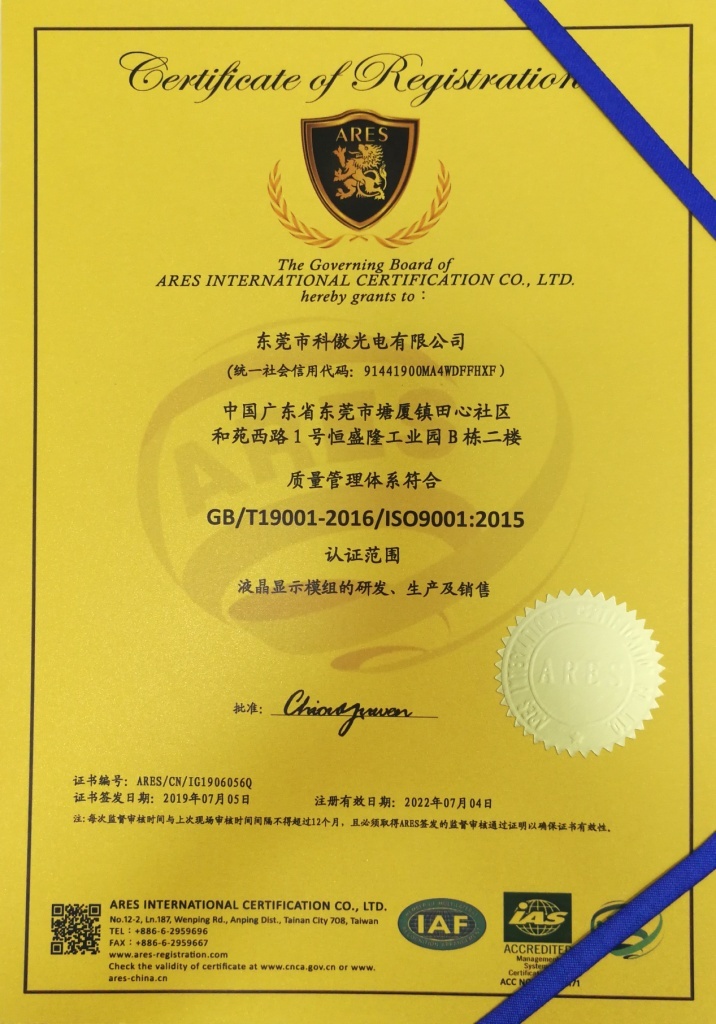
Dongguan Keao Photoelectric Co., Ltd.
Integrity, collaboration, innovation, gratitude
Address
2nd Floor, Building B, Hengshenglong Industrial Zone, Tianxin Town, Tangxia Town, Dongguan City, Guangdong Province, China